
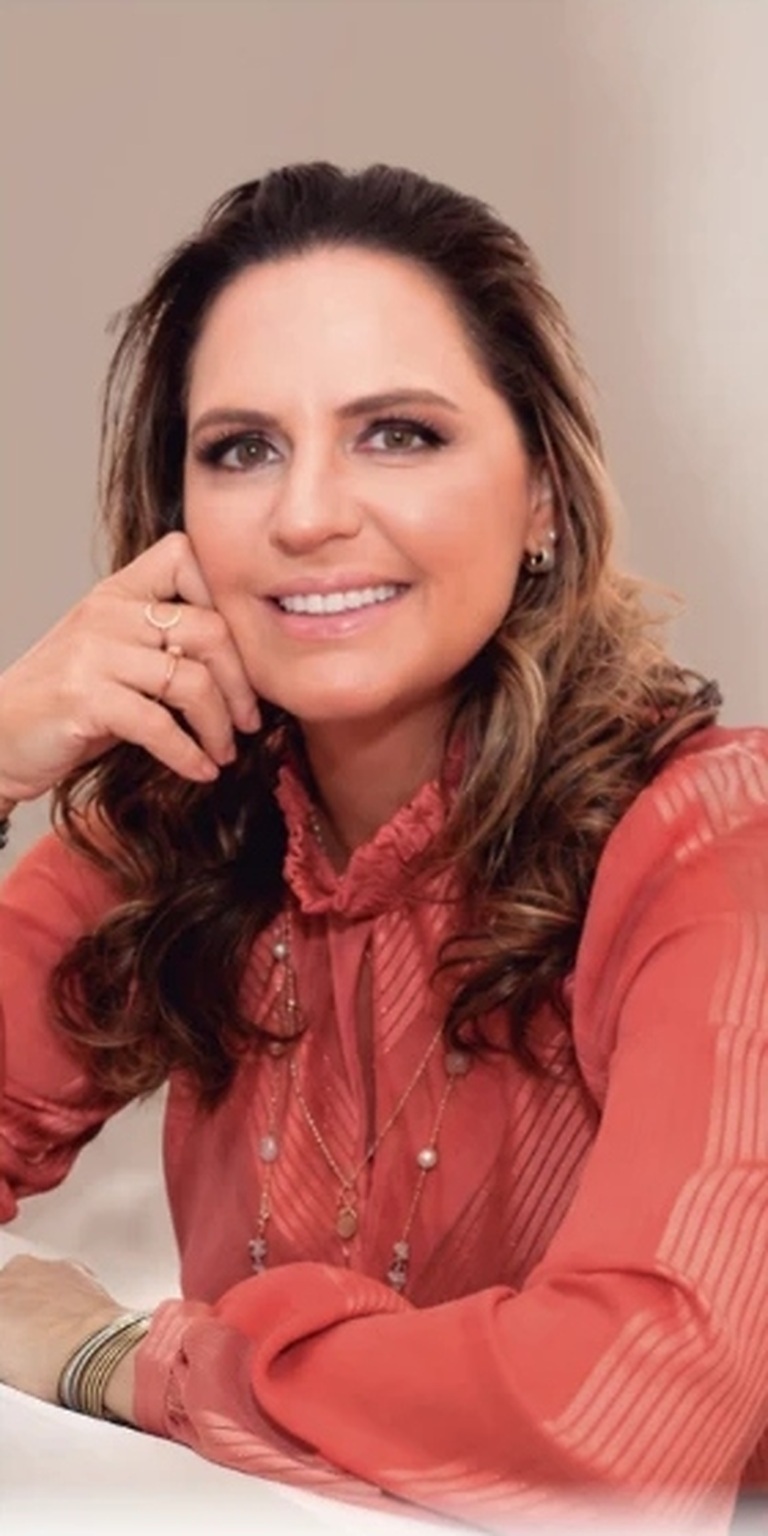
In an interview with the magazine Inovações Médicas — Além da Cirurgia Plástica, plastic surgeon Dr. Tatiana Tournieux explains how cryopreservation can broaden surgical planning options and why preserving cell viability remains a scientific challenge.
Adipose tissue, often associated only with the fat removed during liposuction, has important applications in plastic and reconstructive surgery. Beyond storing energy, it contains different cell populations and biological components that are attracting growing interest in medical research.
In an interview published in Inovações Médicas — Além da Cirurgia Plástica, Dr. Tatiana Tournieux presents the possibilities of cryopreserving this tissue, its potential benefits and the limits that still need to be considered.
From liposuction to cryopreservation
In plastic surgery, fat removed by liposuction can be used for fat grafting (lipofilling), a procedure in which the patient's own tissue is used to fill, reshape or reconstruct certain areas of the body.
Cryopreservation adds one more possibility: storing part of the harvested tissue, under controlled conditions, for possible later use.
In the technique described by the surgeon, the material is preserved in liquid nitrogen, at temperatures close to −196 °C.
The goal is to allow tissue harvested during an already planned procedure to provide, in certain circumstances, tissue for future interventions.
A personal biological bank
According to Dr. Tatiana, one of the main potential advantages of cryopreservation is the planning of staged procedures.
Instead of necessarily repeating liposuction to obtain new tissue, the surgeon may consider using previously stored material, provided it is of adequate quality and there is a clinical indication.
This possibility is particularly relevant for procedures involving reconstruction or successive volume corrections.
However, storing the tissue does not guarantee its future use. The material must meet technical quality and release criteria, and be considered suitable by the responsible physician.
Adipose tissue is more than fat
One of the scientific aspects highlighted in the interview is the biological complexity of adipose tissue.
In addition to adipocytes, which store fat, the tissue contains the so-called stromal vascular fraction, which brings together different cell populations, including cells with stromal or mesenchymal characteristics.
These components are being investigated by researchers seeking to understand tissue repair mechanisms and possible future applications.
However, the presence of these cells does not in itself mean that the tissue has demonstrated regenerative efficacy for any disease.
The challenge of preserving cell viability
Cryopreservation requires strict control of every stage of the process.
During freezing and thawing, cellular changes can compromise the integrity of the tissue.
Dr. Tatiana stresses the importance of cryoprotectants, cooling and rewarming rates, preservation of the extracellular matrix, and processing, transport and storage conditions.
The scientific literature shows that cell viability may decrease after thawing, with results that vary according to the protocols used.
For this reason, assessing the quality of the material is essential. Preserving viable cells does not, on its own, ensure that the tissue will behave clinically like a fresh graft.
Which applications already exist?
Autologous fat grafting has established applications in selected settings of plastic and reconstructive surgery, including procedures on the face, the hands and breast reconstruction.
Prolonged storage of adipose tissue for later grafting, by contrast, requires specific assessment of the quality of the material, the available evidence and the applicable clinical and regulatory conditions.
It is important to distinguish the conventional use of autologous fat from the new possibilities associated with cryopreservation and the investigation of its cellular components.
What about regenerative medicine and alopecia?
The interview also addresses scientific interest in the components of adipose tissue in dermatology, hair research and orthopedics.
These investigations may contribute to the development of new approaches in the future.
In the hair field, for example, conditions such as alopecia are driving research into different cellular mechanisms and therapeutic strategies. This, however, does not constitute a demonstration of the clinical efficacy of cryopreserved adipose tissue in treating the condition.
The same caution should apply to other regenerative proposals still under investigation.
The scientific challenge is not only to preserve tissue and cells, but to demonstrate safety, quality and reproducible clinical benefit for each application.
From technological possibility to clinical evidence
Dr. Tatiana Tournieux's interview illustrates a central question in regenerative medicine: how to turn biological materials and processes into effective clinical possibilities.
Adipose tissue cryopreservation is a biological preservation strategy with the potential to broaden the planning of future procedures.
Its development, however, depends on technically validated protocols, assessment of cell viability and function, follow-up of clinical outcomes and compliance with the applicable regulatory requirements.
It is in this transition between technological possibility and demonstrated benefit that one of the frontiers of contemporary medicine lies.
Main source: interview with Dr. Tatiana Tournieux, plastic surgeon, published in Inovações Médicas — Além da Cirurgia Plástica, pages 16–18 (in Portuguese).
Read the original interview in the magazine
Further scientific reading:
- Cool Fat, Hot Topic: A Systematic Review on Cryopreservation of Adipose Tissue. PubMed
- Cryopreservation of Autologous Adipose Tissue From Liposuction: A Review. PubMed
Editorial note: this article presents information from an interview together with complementary evidence. It does not constitute a treatment recommendation or confirmation of efficacy for investigational applications.